The Sundarbans is the world’s largest mangrove forest located on the coast of the Bay of Bengal, spanning across Bangladesh and India. It is home to numerous species of animals, including the Royal Bengal tiger, the Chitra deer, crocodiles, and various types of birds. The Sundarbans are named after the Sundari tree. The Sundarbans were recognized as a Ramsar site in 1992.
Geographical location
The Sundarbans are located in the delta of the Ganges, Brahmaputra, and Meghna rivers.
About 6,017 square kilometers of it is in Bangladesh, of which 69% is land and 31% is water.
Biodiversity and fauna
It is home to various mammals, including the Royal Bengal tiger, the Chitra deer, the Maya deer, the rhesus monkey, and the wild boar.
The Sundarbans has about 3573.28 square kilometers of forest, where 219 species of aquatic animals, including various types of birds, reptiles, amphibians, and fish, are found.
Importance and Recognition
The Sundarbans are a priceless treasure trove of biodiversity and a haven of natural beauty.
The Sundarbans were declared a Ramsar site on May 21, 1992.
Access and Travel
You can go directly to the Sundarbans from Khulna, and from Dhaka to Khulna by bus or train.
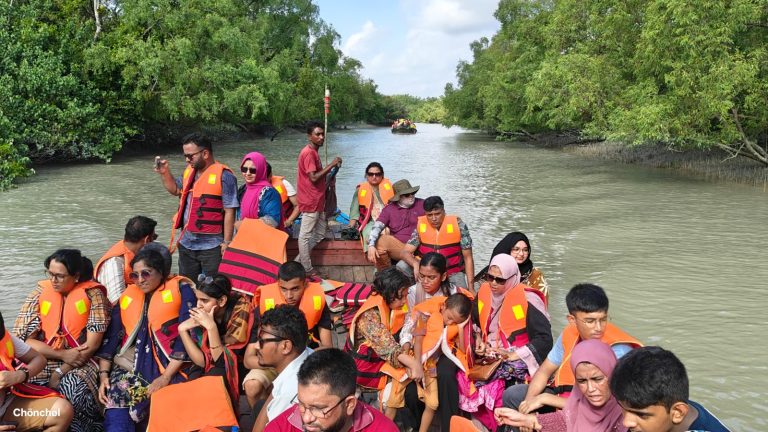
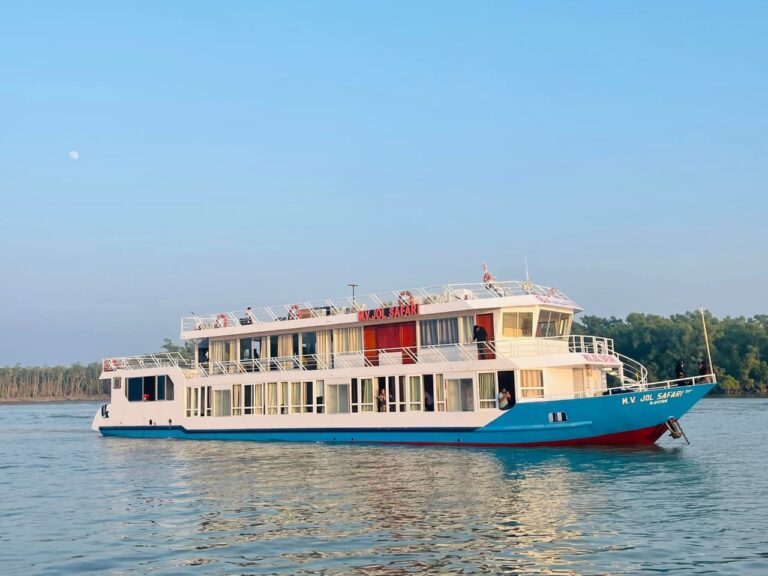
For travel, ships usually enter the Sundarbans from Khulna via Mongla, where boat trips, forest trekking and overnight stays are available.